


China Issued National Standard GB/T 24477-2025 Additional requirements for lifts suitable for persons with disabilities
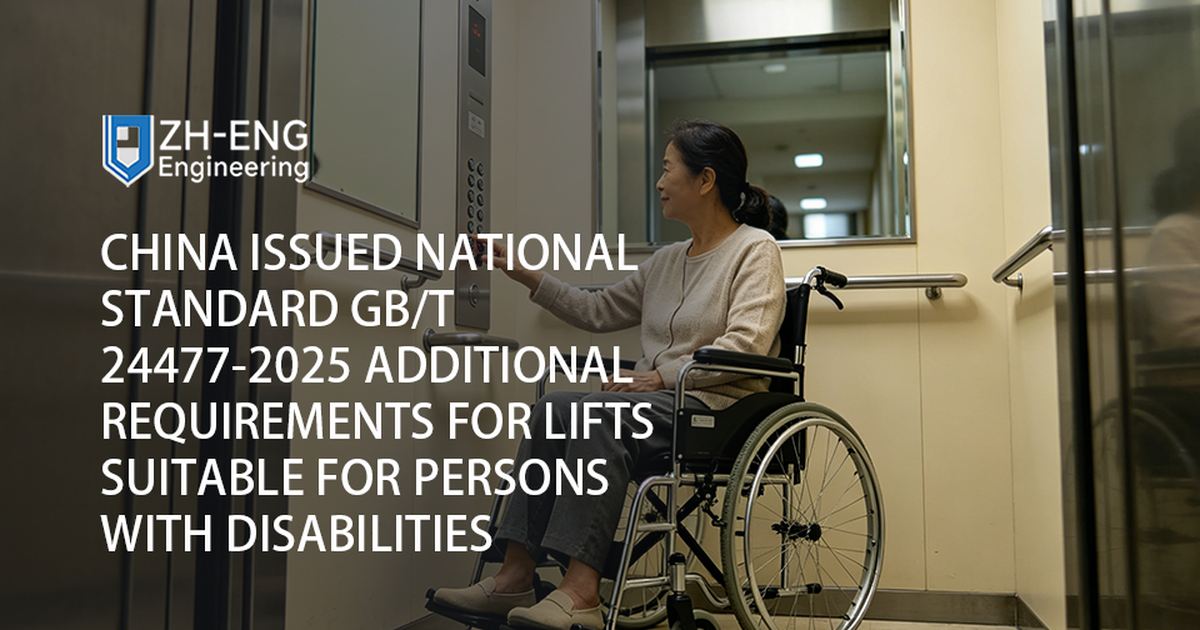
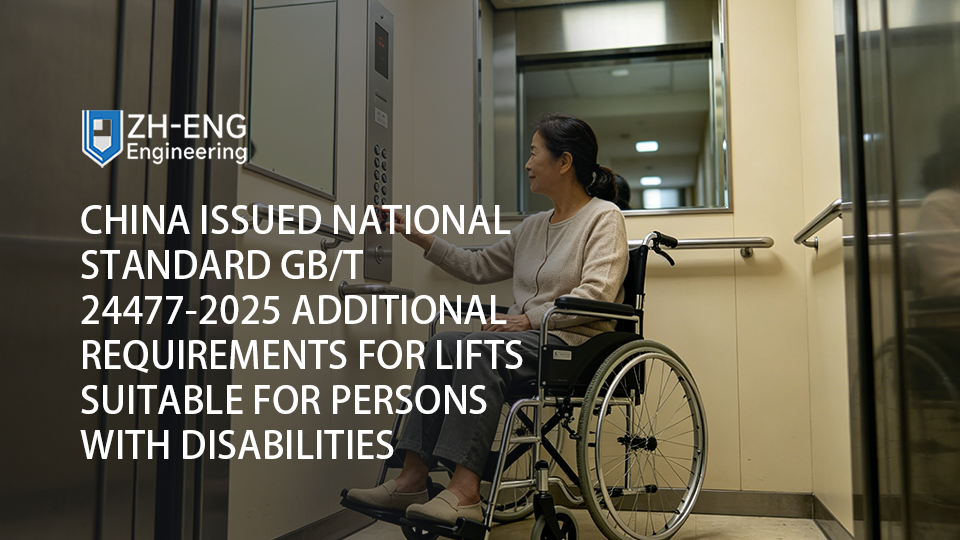
On February 28, 2025, the State Administration for Market Regulation and the Standardization Administration of China officially issued the national standard GB/T 24477-2025 Additional requirements for lifts suitable for persons with disabilities, which will be officially implemented on September 1, 2025, replacing the old version of GB/T 24477-2009, and modifying and adopting the international standard ISO 8100-7:2024. It is the core basis for the design, manufacture and inspection of barrier-free elevators in China. The core upgrade contents of this standard revision include: First, expand the scope of application of the standard, covering all types of passenger elevators, home elevators and medical elevators, applicable to the whole process of elevator design, manufacture, installation, transformation and inspection, adapting to the use needs of all types of disabled people such as visually impaired, hearing impaired, physically disabled and cognitively impaired. Second, refine the mandatory requirements for car barrier-free design, clarify the mandatory standards for the minimum net size of the car, wheelchair turning space, handrail setting, floor anti-skid, lighting brightness, and sound and light environment, and formulate special adaptation design guidelines for wheelchair users and crutch users. Third, upgrade the barrier-free requirements of the control device, clarify the design standards of high and low double-row buttons, Braille signs, tactile feedback, voice broadcast, and emergency call devices, add technical specifications for intelligent barrier-free operations such as voice interaction and gesture control, to ensure that disabled people can operate the elevator independently and safely. Fourth, refine the barrier-free design requirements for landing doors and elevator lobbies, clarify the mandatory standards for the minimum size of elevator lobbies, net width of landing doors, setting of call buttons, and sound and light arrival prompts, and standardize the setting, publicity and maintenance requirements of barrier-free signs. Fifth, add special requirements for age-friendly design, and formulate special design guidelines for elevator operating speed, acceleration and deceleration, leveling accuracy, and door opening holding time according to the use needs of the elderly, adapting to the mobility and usage habits of the elderly. Sixth, add special requirements for barrier-free design of medical elevators, and formulate special design standards for stretcher adaptation, first-aid operation and emergency rescue for hospital and elderly care institution scenarios. Seventh, standardize the inspection and acceptance requirements for barrier-free elevators, formulate standardized specifications for barrier-free performance test, on-site inspection and acceptance process, and improve the qualification criteria. Eighth, add the operation, maintenance and management requirements for barrier-free elevators, clarify the standardized requirements for daily maintenance, regular inspection and fault disposal of barrier-free facilities, to ensure the long-term effectiveness of barrier-free functions. The release of this standard fully aligns with the international advanced standards for barrier-free design, improves the standardized level of barrier-free elevators in China, and contributes to the construction of a barrier-free society.