


EU Issued New Version of EN 81-82:2025 Lifts — Fire stopping for lift hoistways
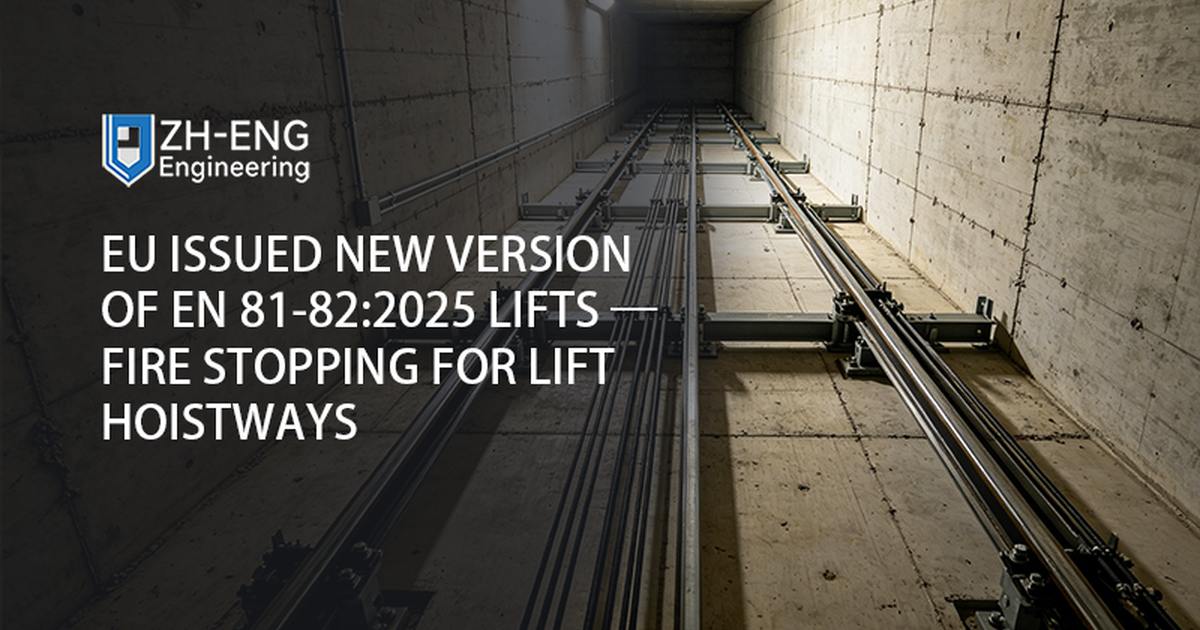
On May 20, 2025, the CEN/TC 10 Technical Committee of the European Committee for Standardization officially issued the new EU standard EN 81-82:2025 Lifts — Fire stopping for lift hoistways, replacing the old 2001 version, which will officially take effect throughout the EU on November 20, 2025, and is the core compliance basis for the fire protection design and construction of elevator hoistways in the EU. The core upgrade contents of this standard revision include: First, expand the scope of application of the standard, covering the fire stopping of hoistways, machine rooms, landing doors, and pipeline crossing parts of all types of elevators, applicable to the whole process of design, construction, inspection and maintenance. Second, clarify the classification system of fire stopping. According to the building fire resistance grade and hoistway fire compartment requirements, the fire stopping is divided into 4 fire resistance grades, and differentiated mandatory standards for fire resistance time, flue gas sealing and structural stability are formulated for different grades. Third, refine the requirements for fire stopping materials, clarify the test standards and qualification criteria for fire resistance, environmental protection performance, durability and compatibility of fire stopping materials, and the use of fire stopping materials that do not meet the standards is strictly prohibited. Fourth, standardize the design requirements for fire stopping, formulate special fire stopping design guidelines for the penetration parts of elevator hoistways and floor slabs and walls, the parts where pipelines, cables and guide rails pass through the fire compartment, and the gaps around the landing doors, and clarify the design requirements for the sealing structure in different scenarios. Fifth, refine the construction and acceptance requirements for fire stopping, formulate standardized specifications for the construction process, quality control, on-site inspection and completion acceptance of fire stopping, and clarify the qualification requirements for construction personnel and the record archiving requirements during the construction process. Sixth, add the maintenance and inspection requirements for fire stopping of in-use elevators, clarify the frequency and requirements of daily inspection, regular maintenance and performance testing of fire stopping, and formulate the replacement and repair guidelines for aged and damaged sealing structures. Seventh, standardize the test method of fire stopping performance, formulate a standardized process for laboratory testing and on-site testing of fire resistance, flue gas sealing performance and structural stability, and unify the test and verification guidelines within the EU. After the release of this standard, EU member states need to complete the transformation and implementation of their national standards before November 2025, and the fire stopping of elevator hoistways for new and renovated elevators in the EU must meet the requirements of this new version of the standard.