


National Standard GB/T 24803.2-2025 Safety Requirements for Lifts—Part 2: Safety Parameters Officially Released
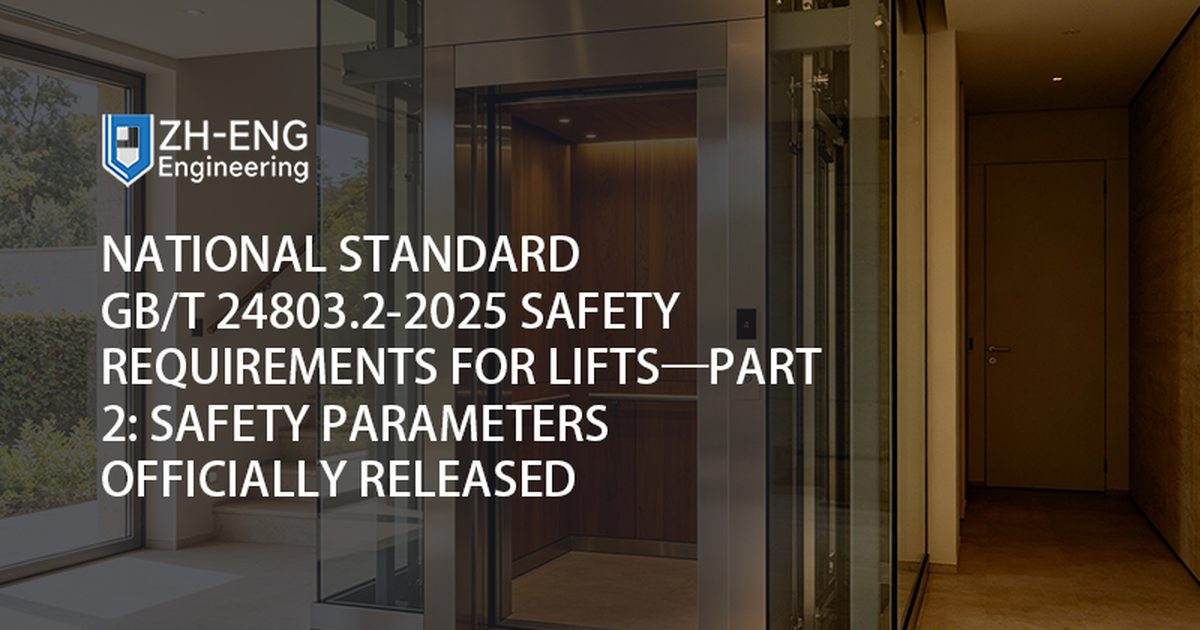
Under the jurisdiction of the National Elevator Standardization Committee, this standard applies to passenger lifts, goods lifts and home lifts. Core upgrades:
① Reconstructs the safety parameter system, clarifies quantitative indicators for 32 essential safety functions, such as braking distance, leveling accuracy, overload protection response time;
② Introduces risk assessment methodology, guiding enterprises to design according to the whole process of "risk identification—analysis—evaluation—control";
③ Unifies verification and test methods, adds judgment criteria for safety parameters in type tests, factory inspections and installation acceptance;
④ Is compatible with new drive/control technologies (e.g., permanent magnet synchronous, IoT, energy feedback), clarifies equivalent safety evaluation rules.
After implementation, China's elevator safety design shifts from "descriptive standards" to "performance-oriented standards", clearing obstacles for quick access of new technologies and products, and enhancing international competitiveness.