


Large-scale Commercialization of 5G Wireless Communication Full Coverage System for Elevator Shafts, Signal Coverage in Shafts Reaches 100%
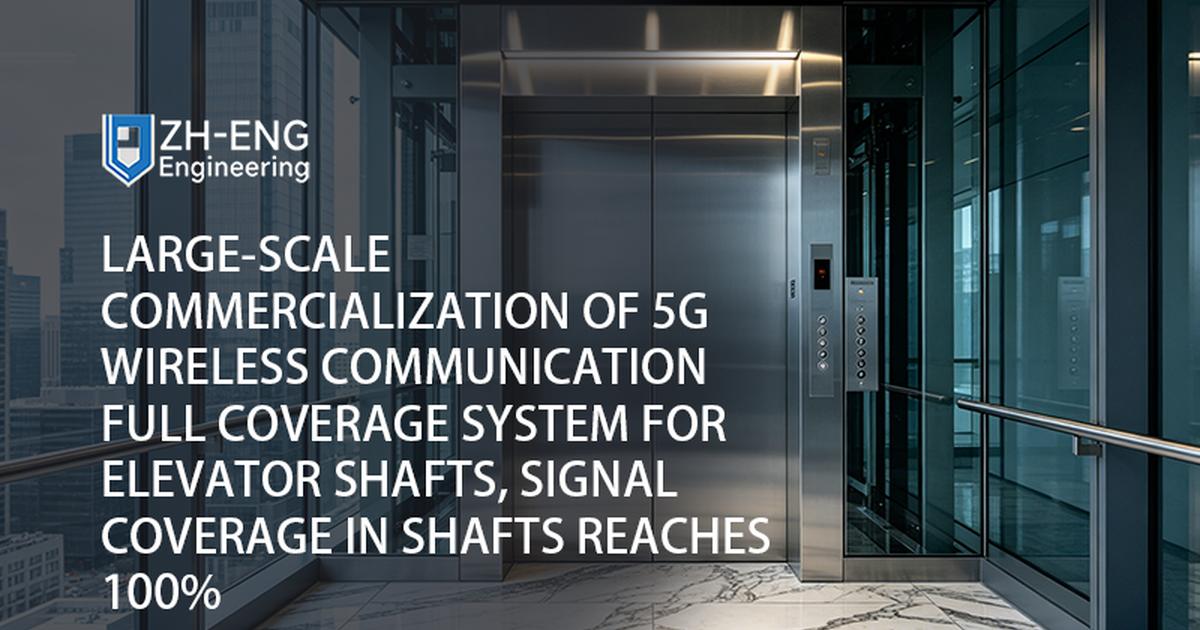
Core technical advantages: First, full-area blind spot-free coverage, adopting the combined scheme of distributed micro base station + directional leaky cable in the shaft, laying leaky cables along the entire elevator shaft, cooperating with micro base stations at the top and bottom of the shaft, realizing blind spot-free signal coverage of the full height of the shaft and the full stroke of the car. The 2G/3G/4G/5G signals of the three major operators are fully covered, the signal strength meets the national communication standards, the call connection rate in the car is 100%, no dropped calls, no freezes; Second, 5G high-speed low-latency transmission, the system supports 5G SA independent networking mode, downlink rate ≥1Gbps, uplink rate ≥100Mbps, end-to-end delay ≤20ms, which can meet the high-speed network requirements of elevator IoT monitoring, high-definition video surveillance, AI visual recognition, and remote operation and maintenance; Third, multi-operator compatible sharing, one system can be compatible with all communication frequency bands of the three major operators: China Mobile, China Unicom, and China Telecom at the same time, supports shared access of multi-operator signals, no need for repeated construction, greatly reducing construction costs; Fourth, convenient installation and strong adaptability, adopting modular design, no need to modify the original structure of the elevator, no need to damage the shaft wall, adaptable to all brands and models of elevators, can be installed in both new and old elevators. The installation cycle of a single elevator is no more than 4 hours, and does not affect the normal operation of the elevator; Fifth, intelligent operation and maintenance and management, the system has a built-in intelligent monitoring platform, which can real-time monitor signal strength, equipment operation status, and network quality, automatically alarm and locate faults, support remote operation and maintenance and management. The average mean time between failures of the system is ≥100,000 hours, and the service life is not less than 10 years.