


Hawaii Army Elevator Modernization Requires Local Licensing and Trade Competence
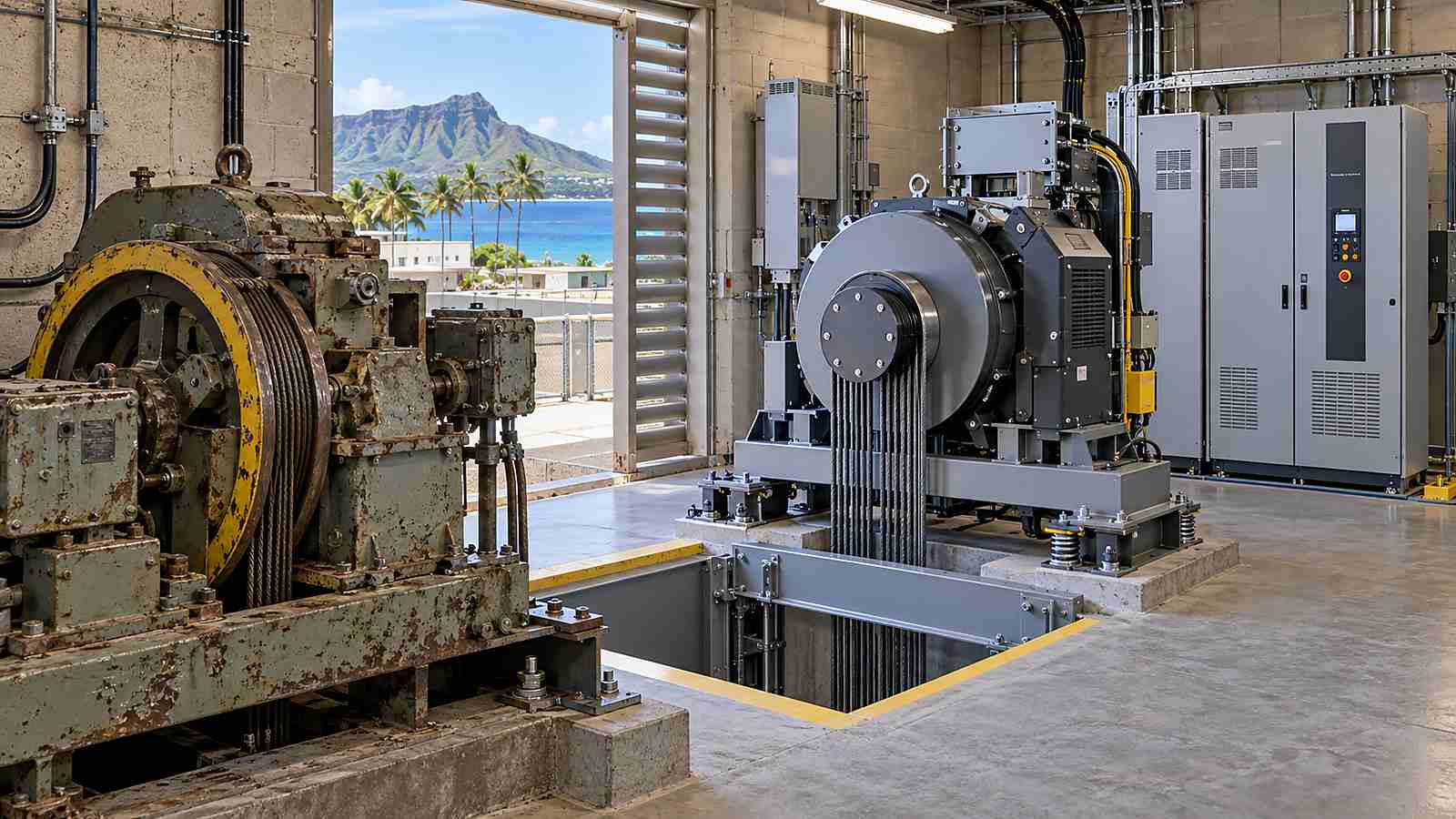
A U.S. Army procurement for elevator modernization at Schofield Barracks and Wheeler Army Airfield covers Buildings 777, 778 and 901 in Hawaii. The notice draws attention to local elevator licensing and technician qualification as explicit delivery requirements.
SAM.gov describes aging controls and mechanical equipment and requires appropriate Hawaii licensing plus recognized elevator trade competence such as CET, NEIEP or equivalent qualification. The tender record does not confirm award or completed performance.
What the Published Record Establishes
The source confirms the named notice, article or market finding and the dates and figures stated above. It does not prove an award, completed project or universal performance result. ZH-ENG therefore keeps source facts separate from the following editorial analysis.
Why This Matters for Delivery
International component supply must sit inside a locally licensed installation and acceptance route. Documentation, wiring, revision control, testing support and replacement compatibility can be as important as unit price.
For international teams, the practical issue is information maturity. A schedule or price is credible only when drawings, interfaces, approvals, responsibilities and evidence requirements are clear enough for suppliers to quote the same scope.
Buyer and Project Considerations
- Verify licensing and named competent personnel before bid submission.
- Match controller, machine, door and safety interfaces to field surveys.
- Provide traceable manuals, drawings and test support for local acceptance.
Buyers should request a compliance matrix, interface register, revision history, inspection plan and realistic manufacturing or service programme. The ISO 8100 elevator safety framework is a useful technical reference where relevant, but the adopted local rules and issued contract documents remain decisive.
ZH-ENG Editorial View
ZH-ENG approaches this as a elevator safety parts supplier China, connecting verified project information with manufacturable scope rather than promoting catalogue-only selection. The useful next step is to provide the destination market, application, drawings, duty or occupancy requirements, code basis and delivery boundary. Buyers can review relevant ZH-ENG solutions before requesting a project-specific compatibility discussion.
What to Watch Next
Further amendments, awards, design guidance or measured project results may change the commercial interpretation. Until such evidence is published, estimates and forward-looking statements should remain clearly labelled.
Sources
SAM.gov — Hawaii Army Elevator Modernization Requires Local Licensing and Trade Competence