


EU Issued New Version of Harmonized Standard EN ISO 8100-1:2026 Safety rules for the construction and installation of lifts
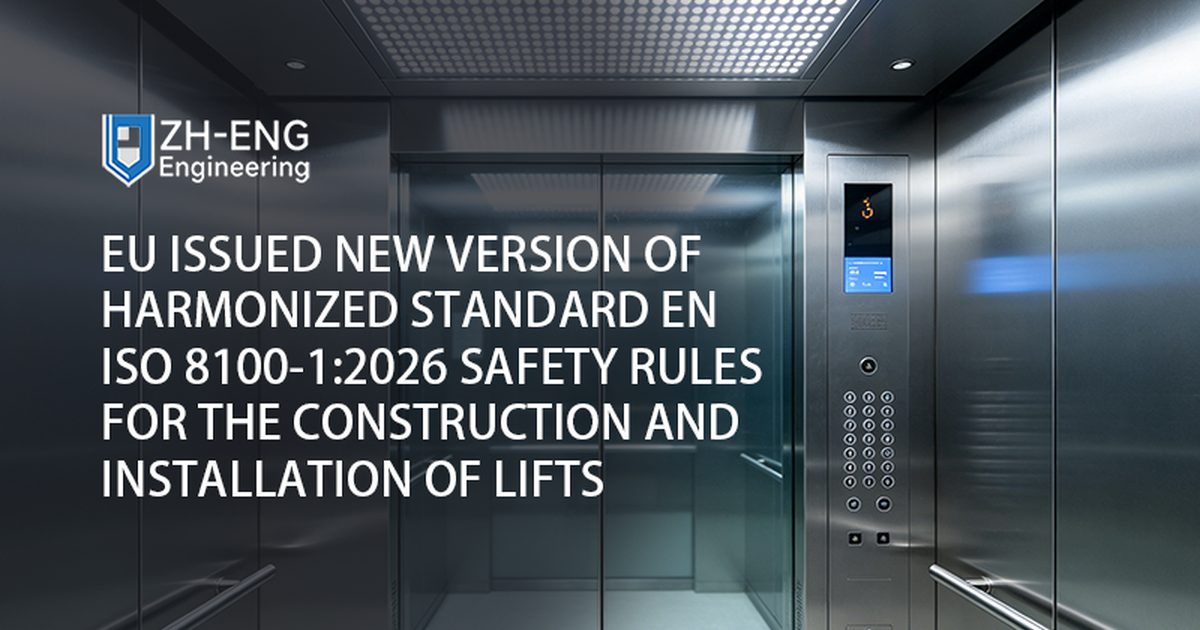
On April 8, 2026, the European Committee for Standardization CEN officially issued the new version of EU harmonized standard EN ISO 8100-1:2026 Safety rules for the construction and installation of lifts, which is identical to the international standard ISO 8100-1:2026, replacing the old harmonized standards EN 81-20:2014 and EN 81-50:2014. It will officially take effect throughout the EU on October 8, 2026, and become the core mandatory compliance basis for CE certification of elevator products in the EU. The core contents of this standard include: First, fully align with the EU Lift Safety Directive 2014/33/EU, clarify the technical guidelines for elevator products to meet the EU Essential Safety Requirements (ESR). Elevator products that meet this standard can directly use the CE mark and enter the EU single market. Second, expand the scope of application of the standard, covering traction, positive drive, hydraulic passenger elevators and freight elevators, including special types of elevators such as machine-room-less elevators, home elevators, explosion-proof elevators, and fire-fighting elevators, adapting to the elevator safety needs of different building scenarios. Third, refine the safety requirements for elevator design and manufacture, and formulate comprehensive safety design guidelines, strength calculation methods, and safety factor requirements for elevator hoistways, machine rooms, cars, counterweights, suspension devices, door systems, drive systems, and braking systems. Fourth, upgrade the requirements for elevator safety protection devices, refine the mandatory technical standards for overspeed protection, overload protection, door interlock protection, fall protection, buffer protection, and emergency rescue, and add special safety requirements for electronic safety components and non-wire rope suspension devices. Fifth, add elevator functional safety and network security requirements, clarify the safety integrity level (SIL) requirements and network security protection standards for elevator electronic safety systems, intelligent control systems, and IoT systems, adapting to the development trend of intelligent elevator technology. Sixth, refine the whole process specification for elevator installation and acceptance, clarify the standardized process of quality control, on-site inspection, load test and safety verification during elevator installation, and improve the qualification criteria for delivery and use. Seventh, standardize the requirements for elevator use, maintenance and scrapping disposal, and formulate special guidelines for the daily use, regular maintenance, regular inspection, transformation and upgrading, and scrapping disposal of elevators. After the release of this standard, EU member states need to complete the transformation and implementation of their national standards before October 2026, and all elevator products entering the EU market must meet the requirements of this new harmonized standard.